
PRODUCT CATEGORY COMPARISON
Anti-Embolism Stockings vs Compression Stockings: A Buyer’s Guide
These two product categories may look similar, but their intended professional channels, user context, construction details and documentation briefs are different.
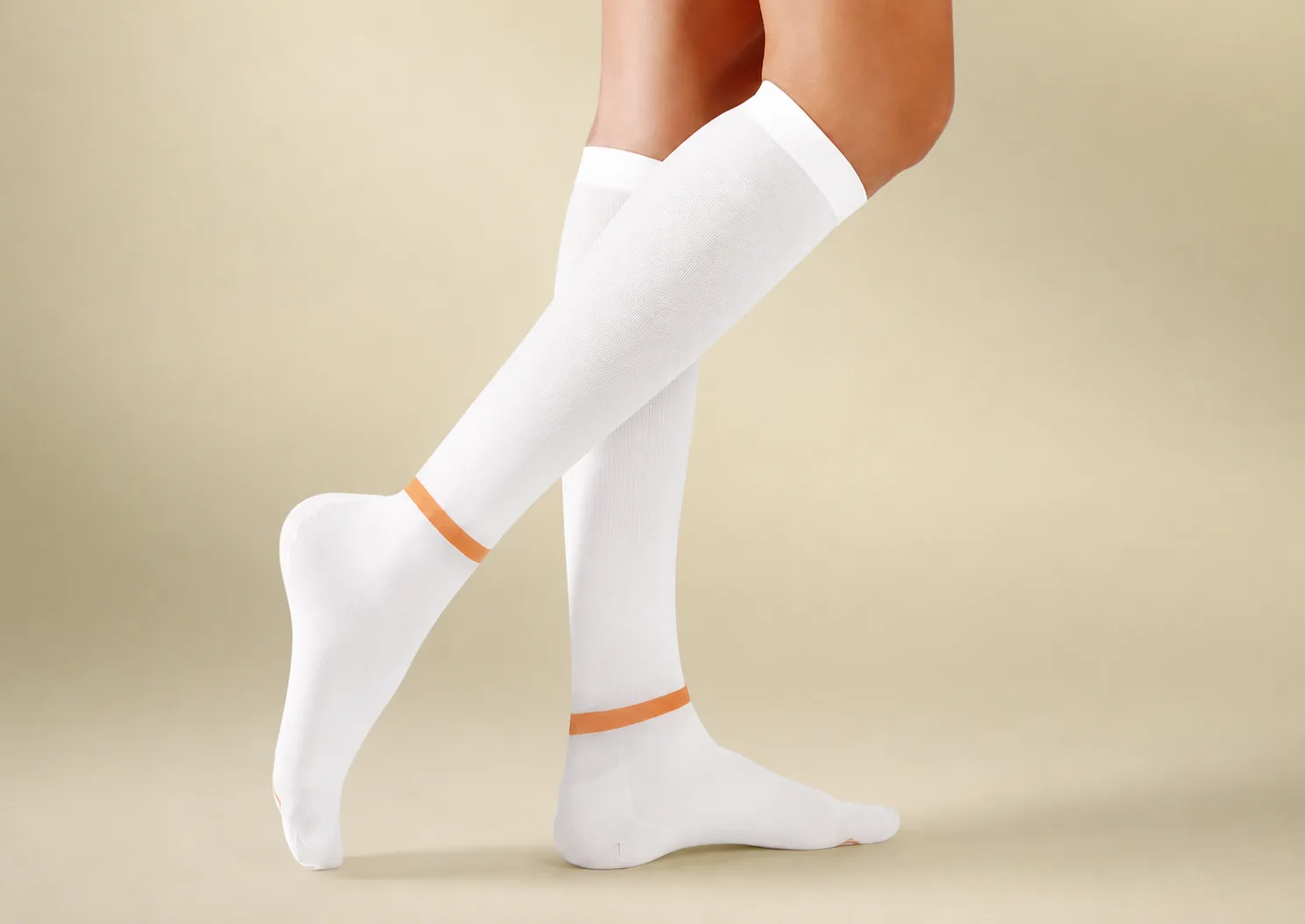
The key distinction is the approved intended use
Anti-embolism stockings are typically developed for hospital, perioperative and limited-mobility care programs defined by the buyer. Medical compression stockings are more often planned for ambulatory medical or specialist retail channels with a selected graduated pressure range and a broader choice of styles.
A supplier should not decide the clinical application on behalf of the buyer. The buyer's clinical, regulatory and product teams must define the intended use, user population, claims and target-market requirements before labels and instructions are prepared.
| Specification area | Anti-embolism program | Medical compression program |
|---|---|---|
| Typical channel | Hospital and perioperative supply | Medical, pharmacy and specialist distribution |
| Mobility context | Buyer-defined bed-rest or limited-mobility protocol | Buyer-defined ambulatory product program |
| Common construction | White, below-knee or thigh-high, inspection aperture | Multiple colors, lengths, open or closed toe |
| Pressure brief | Defined for the approved hospital program | EU, US or custom graduated range |
| Packaging | Clinical, individual or bulk packs | Clinical or branded retail presentation |
Construction details buyers should decide early
Small construction choices can change fit, inspection workflow, packaging and the sample approval process. They belong in the first technical brief.
- Below-knee or thigh-high length
- Inspection aperture or toe construction
- Silicone grip, top band or waist-belt option
- Color, size identification and traceability markings
- Single-pair, clinical or bulk packaging
- Label and instructions-for-use content supplied by the buyer
Why one product should not simply be relabeled as the other
Changing only the package name can create mismatches between intended use, pressure specification, fit, labeling and market documentation. A responsible OEM program keeps the approved product specification and its commercial presentation aligned.
For existing products, MAIZI can review a tech pack or reference sample. For new programs, the team develops construction, sizing, pressure and packaging against a signed buyer brief before bulk production.
RFQ checklist for a clear category decision
Send enough information for the supplier to confirm which development route and validation plan is appropriate.
- Target country, buyer type and intended sales channel
- Buyer-approved intended use and user context
- Pressure, length, toe, top-band and sizing requirements
- Estimated quantity, branding and pack format
- Required labels, instructions, reports and market documents
BUYER FAQ
Questions buyers ask before sampling
Are anti-embolism stockings the same as compression stockings?
No. They are separate product programs that should be defined by intended use, target user context, pressure specification, construction, labeling and channel requirements.
Can MAIZI make both categories?
Yes. MAIZI manufactures anti-embolism and graduated medical compression products in below-knee and thigh-high constructions, with buyer-defined sizing, labels and packaging.
Who is responsible for clinical claims?
The buyer's qualified clinical and regulatory teams must approve intended use, claims, labeling and target-market compliance. MAIZI manufactures against the confirmed specification.
START A PROJECT
Send us your target specification.
We will confirm the suitable construction, MOQ, sample plan, testing route and production timing.
Request a Quote